Southwest Desert Fine Art Photography Prints
Fine art desert photography prints from the American Southwest. Monument Valley at sunrise. Death Valley's Artist Palette in mineral color. The vast sandstone geometry of Moab. The quiet strangeness of Marfa, Texas.
These minimalist landscape photography prints find pattern and rhythm in landscapes shaped by time and erosion. Shot by Glen Wilbert, an award-winning photographer whose work has been selected for exhibitions at the Arlington Museum of Art, the Haggin Museum, and venues across Texas, Colorado, and New Mexico. Available as framed canvas prints in sizes from 8×10 to 24×36 inches, with pine tree frame and archival-weight canvas. Distinctive wall art for modern homes, offices, and anyone drawn to the beauty of the American desert.
Award-Winning Photography · 30+ Juried Exhibitions · Archival-Quality Canvas · Ready to Hang · Ships Worldwide
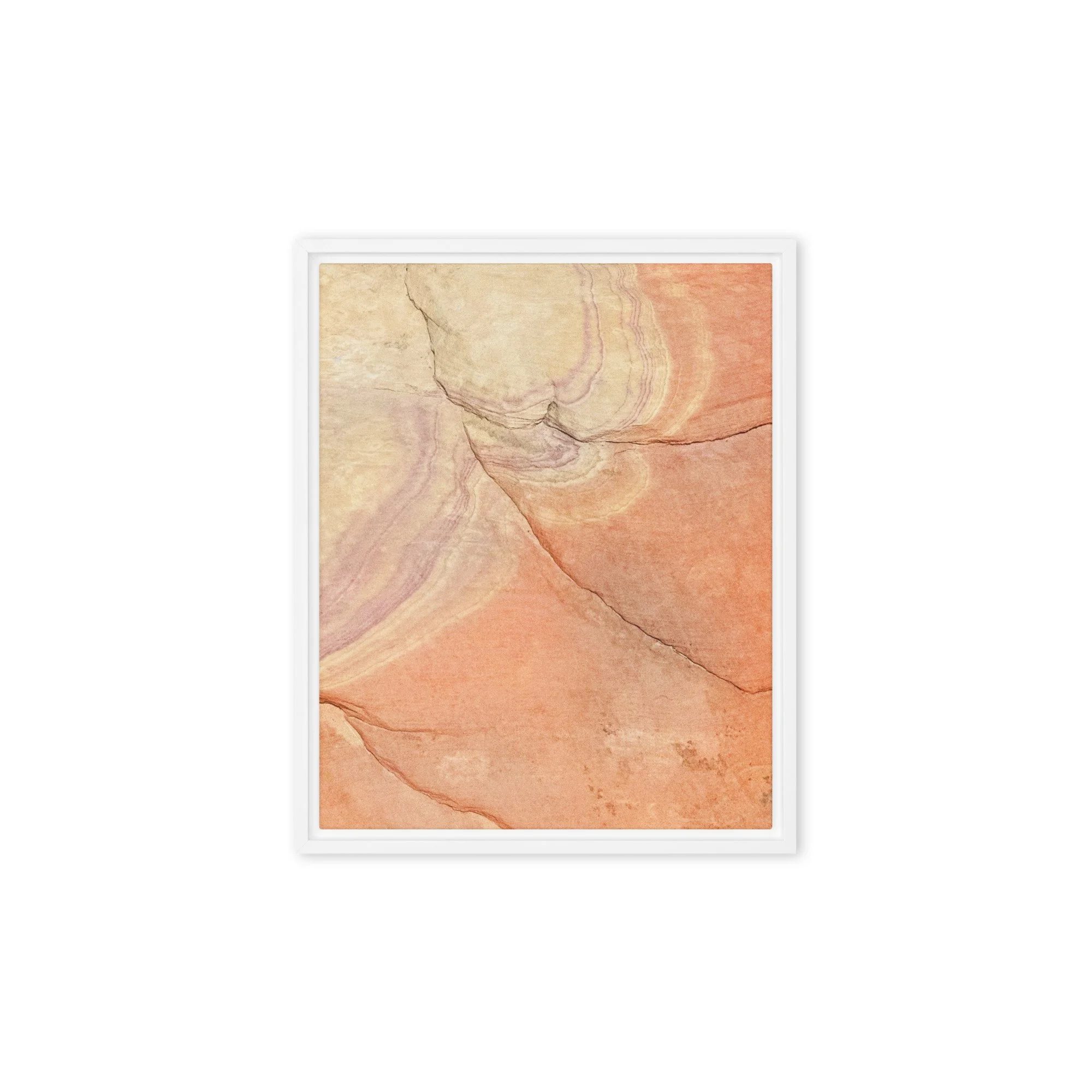
In "Nevada Desert Orange," Glen Wilbert photographs a close-up section of desert rock, framing a warm orange field cut across by a pale cream ridge and soft layered lines that curve down through the center of the frame.
The composition holds a warm pastel palette of orange, peach, and cream, with the color running in soft blended layers rather than sharp bands. Glen framed the rock tight and let the pale rounded form at the top left set against the deeper orange below, so the picture reads as one shape resting on another. Faint cracks and stripes trace the surface, giving the flat color a quiet inner rhythm without ever breaking its softness.
The image was made in the Nevada desert, capturing the layered warmth of sun-lit sandstone. It is part of a four-piece series that treats the desert as an arrangement of close-up color and form, pairing with the yellow, purple, and rose pieces.
A study in pastel warmth and soft form, where the desert is reduced to blended fields of orange and cream.
Awards and Recognition
Glen Wilbert's work has earned national recognition, including First Place at the 2024 iPhone Photography Awards, multiple Gold Medals at the reFocus Awards, and selection for more than thirty juried exhibitions across the United States.
Details
Framed canvas print, pine wood frame with a floating-frame effect
Frame thickness: 1.25 in (3.18 cm)
Canvas weight: approximately 344 g/m2
White frame with a white inner border around the canvas
Open back, rubber corner pads, hanging hardware attached
Printed and framed in the USA
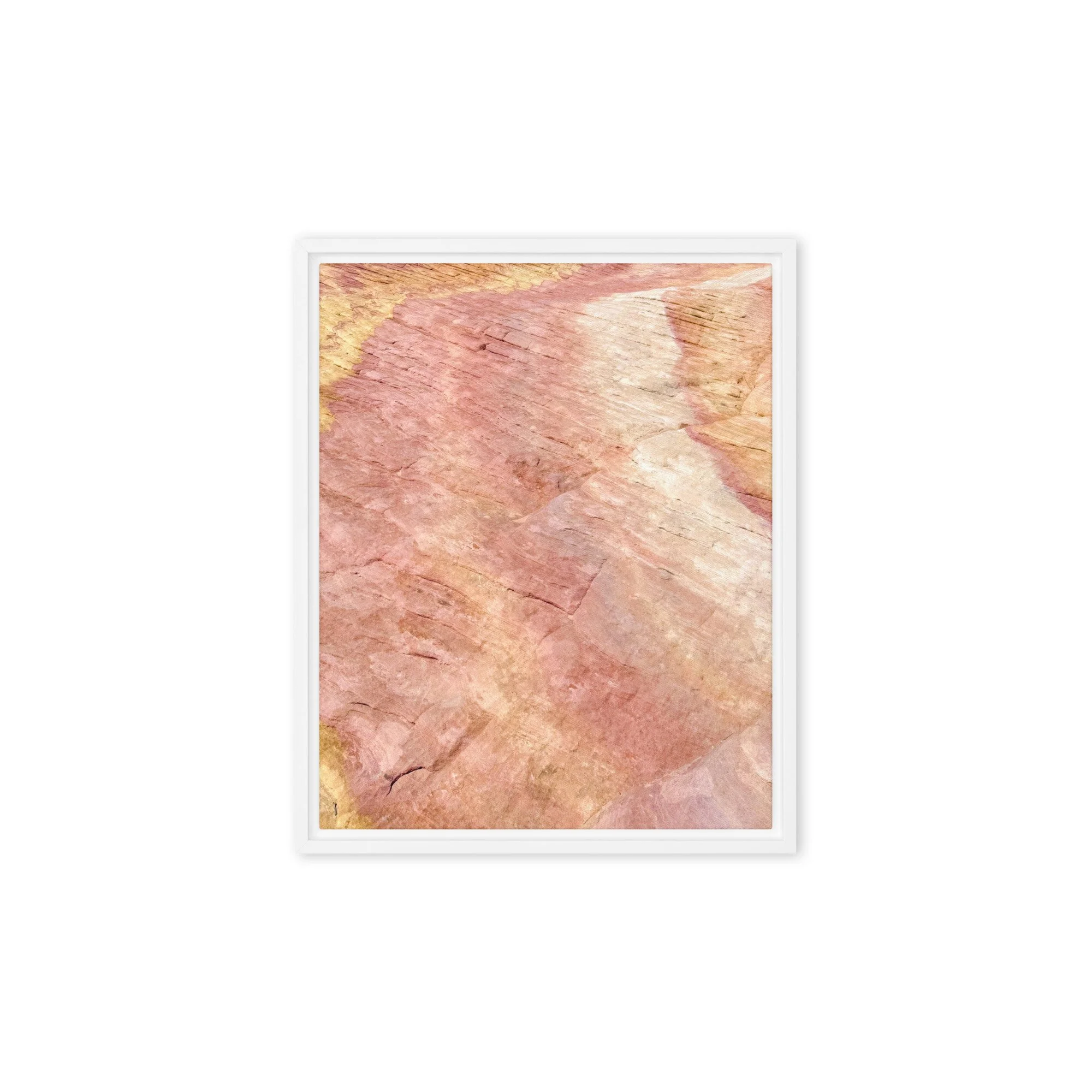
In "Nevada Desert Rose," Glen Wilbert photographs a close-up section of desert rock, filling almost the whole frame with a broad expanse of soft rose and gold stone marked with faint flowing lines and quiet shifts of color.
The composition is the most open of the four in the series: a nearly monochrome field of pastel pink washed with gold at the corners, with subtle marks that trace across the surface like soft brushstrokes. Glen framed the scene wide across the rock so no clear edge divides the picture, and the eye moves across the color and the gentle textures instead. The overall effect is close to painting, the desert reduced to a single quiet expanse.
The image was made in the Nevada desert, capturing the soft blush of sunlit sandstone. It is part of a four-piece series that reads the desert as close-up color and surface, pairing with the yellow, purple, and orange pieces.
A study in pastel tone and softness, where the desert is reduced to a single quiet field of rose.
Awards and Recognition
Glen Wilbert's work has earned national recognition, including First Place at the 2024 iPhone Photography Awards, multiple Gold Medals at the reFocus Awards, and selection for more than thirty juried exhibitions across the United States.
Details
Framed canvas print, pine wood frame with a floating-frame effect
Frame thickness: 1.25 in (3.18 cm)
Canvas weight: approximately 344 g/m2
White frame with a white inner border around the canvas
Open back, rubber corner pads, hanging hardware attached
Printed and framed in the USA
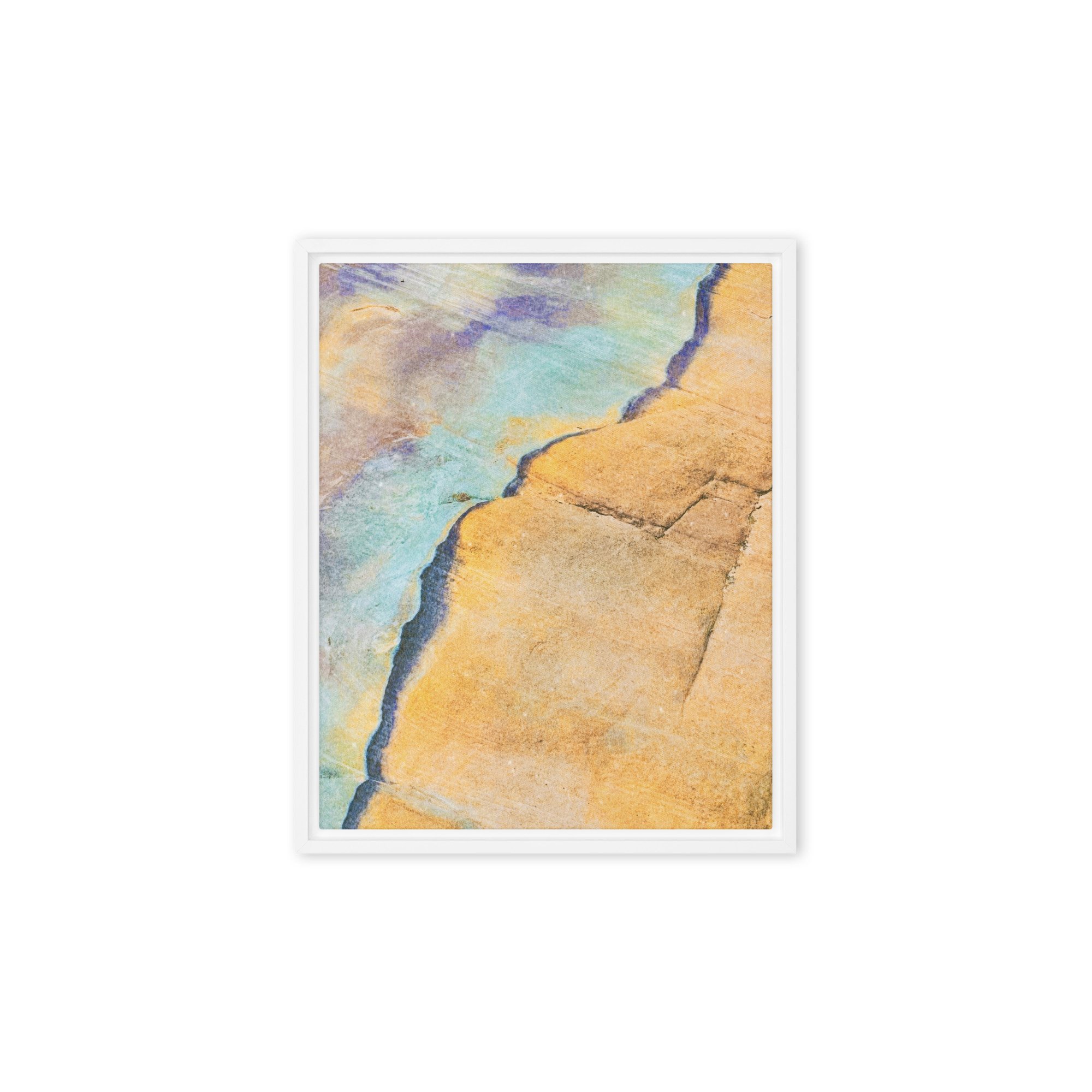
In "Nevada Desert Yellow," Glen Wilbert photographs a close-up section of desert rock, framing a warm yellow-gold surface that meets a jagged edge of turquoise and lavender staining along the left of the frame.
The composition is built on two fields: the smooth, sandy yellow of the sunlit rock on one side and the cooler mineral color, pale turquoise streaked with violet and rust, on the other, divided by a soft, uneven line. Glen shot in tight so the frame holds nothing but the rock itself, with subtle fractures running across the yellow surface and grains of texture catching the light. The palette stays soft and sun-faded throughout, keeping the whole picture in a quiet pastel range.
The image was made in the Nevada desert, capturing the natural staining that mineral deposits and weathering leave on sandstone. It is one of a four-piece series that treats the desert as a study in close-up color and edge rather than wide landscape.
A study in pastel color and edge, where two mineral fields meet along a single quiet line.
Awards and Recognition
Glen Wilbert's work has earned national recognition, including First Place at the 2024 iPhone Photography Awards, multiple Gold Medals at the reFocus Awards, and selection for more than thirty juried exhibitions across the United States.
Details
Framed canvas print, pine wood frame with a floating-frame effect
Frame thickness: 1.25 in (3.18 cm)
Canvas weight: approximately 344 g/m2
White frame with a white inner border around the canvas
Open back, rubber corner pads, hanging hardware attached
Printed and framed in the USA
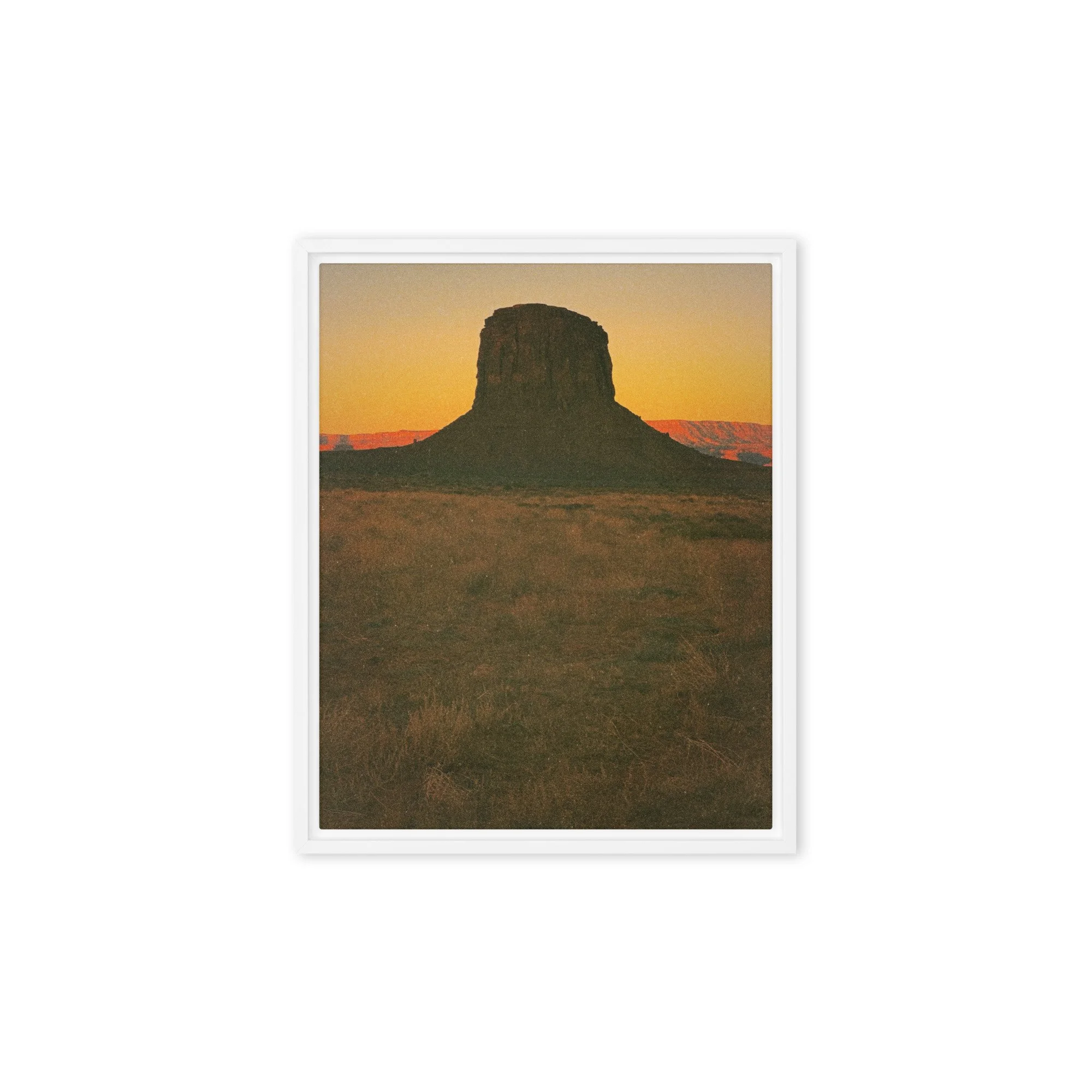
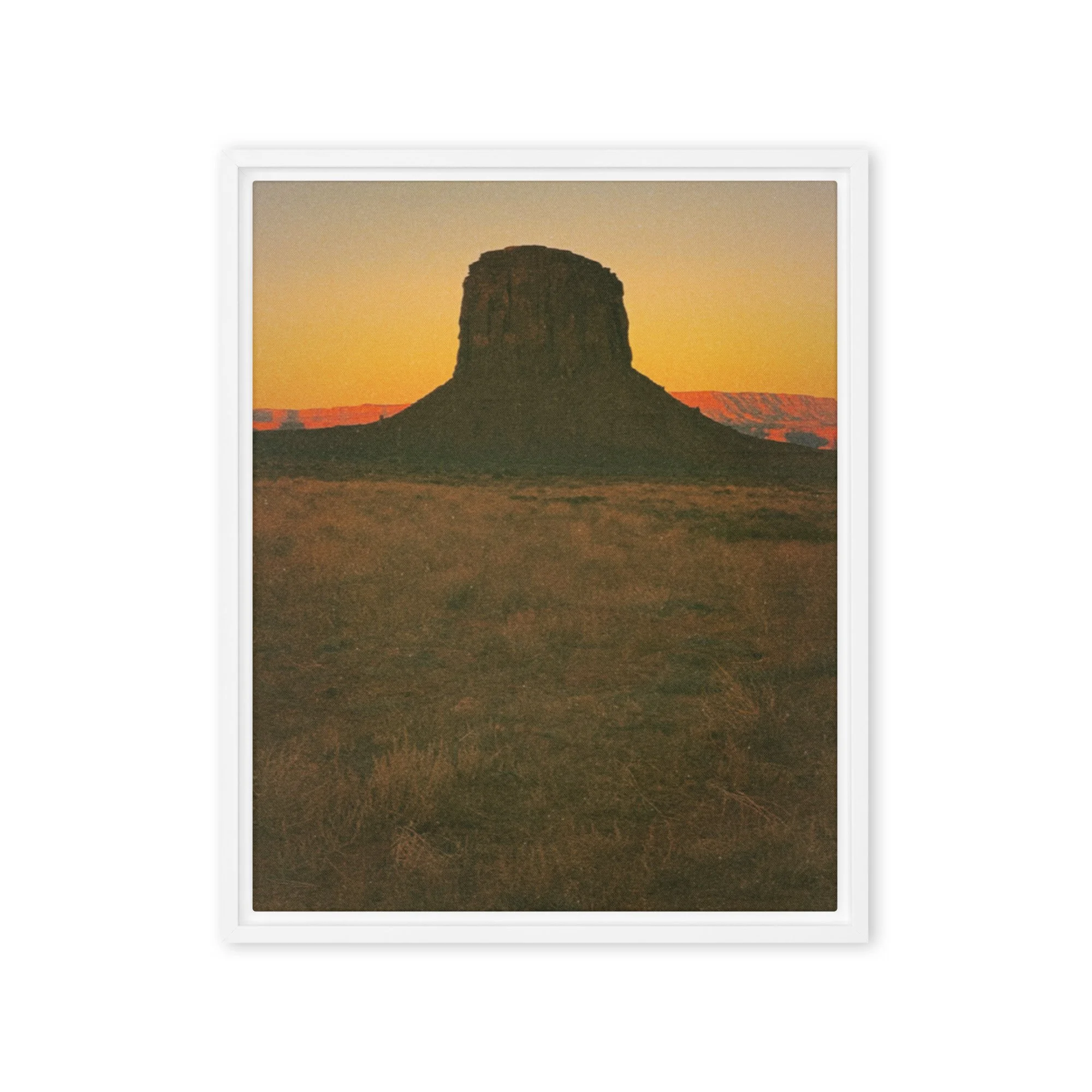
In "Sunrise, Monument Valley," Glen Wilbert photographs a single butte in Monument Valley silhouetted against the sunrise, the dark rounded formation standing on the open plain while the sky behind it glows gold and a far ridge catches the first red light.
The image holds a warm pastel palette of gold, amber, and soft brown, the rising sun flooding the sky behind the butte and leaving the formation itself in near-total shadow. Glen framed the scene with the silhouetted butte centered above a wide foreground of dry grassland, so the dark shape reads against the luminous sky while a thin band of sunlit red rock glows along the horizon to the right. The grain and soft light give the picture a quiet, early-morning stillness.
This is the fourth in Glen's Monument Valley series, taken at first light on the high desert plain near the Utah-Arizona border. Where the other valley images follow the road or the mirror, this one reduces the landmark to a single dark silhouette against the dawn.
A study in pastel light and silhouette, where a desert butte stands dark against a glowing sunrise.
Awards and Recognition
Glen Wilbert's work has earned national recognition, including First Place at the 2024 iPhone Photography Awards, multiple Gold Medals at the reFocus Awards, and selection for more than thirty juried exhibitions across the United States.
Details
• Framed canvas print, pine wood frame with a floating-frame effect
• Frame thickness: 1.25 in (3.18 cm)
• Canvas weight: approximately 344 g/m2
• White frame with a white inner border around the canvas
• Open back, rubber corner pads, hanging hardware attached
• Printed and framed in the USA
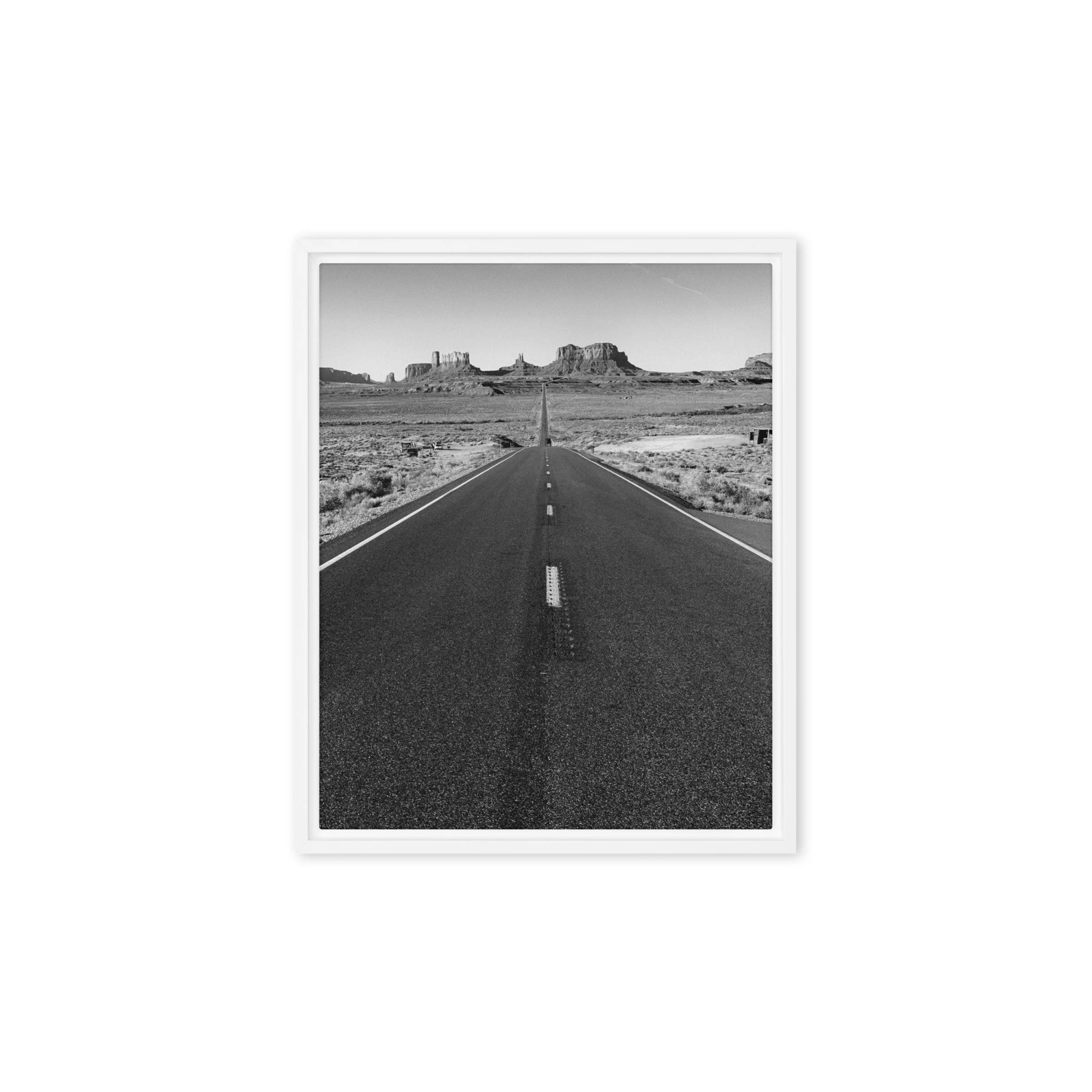
In "Monument Valley," Glen Wilbert photographs the long approach highway to Monument Valley, the two-lane road running straight from the foreground to a far rise where the buttes and mesas line the horizon under a wide, clear sky.
The image is rendered in black and white, with the dark road and its dashed center line drawing the eye from the bottom of the frame to the distant rock formations. Glen shot from the center of the highway so the lanes taper to a point near the horizon, the scrub-dotted desert spreading flat on either side and the iconic buttes clustered small along the skyline. The deep tonal range, from black asphalt to pale sky, gives the picture its graphic clarity. A faint contrail crosses the upper sky.
This view, on the highway approaching the Utah-Arizona border, is one of the most recognized road-trip scenes in the American West. It is a central image for the When in Roam project and its open-road theme.
In black and white, the composition is built on line and perspective: a single road tapering toward the buttes on the horizon.
Awards and Recognition
Glen Wilbert's work has earned national recognition, including First Place at the 2024 iPhone Photography Awards, multiple Gold Medals at the reFocus Awards, and selection for more than thirty juried exhibitions across the United States.
Details
• Framed canvas print, pine wood frame with a floating-frame effect
• Frame thickness: 1.25 in (3.18 cm)
• Canvas weight: approximately 344 g/m2
• White frame with a white inner border around the canvas
• Open back, rubber corner pads, hanging hardware attached
• Printed and framed in the USA
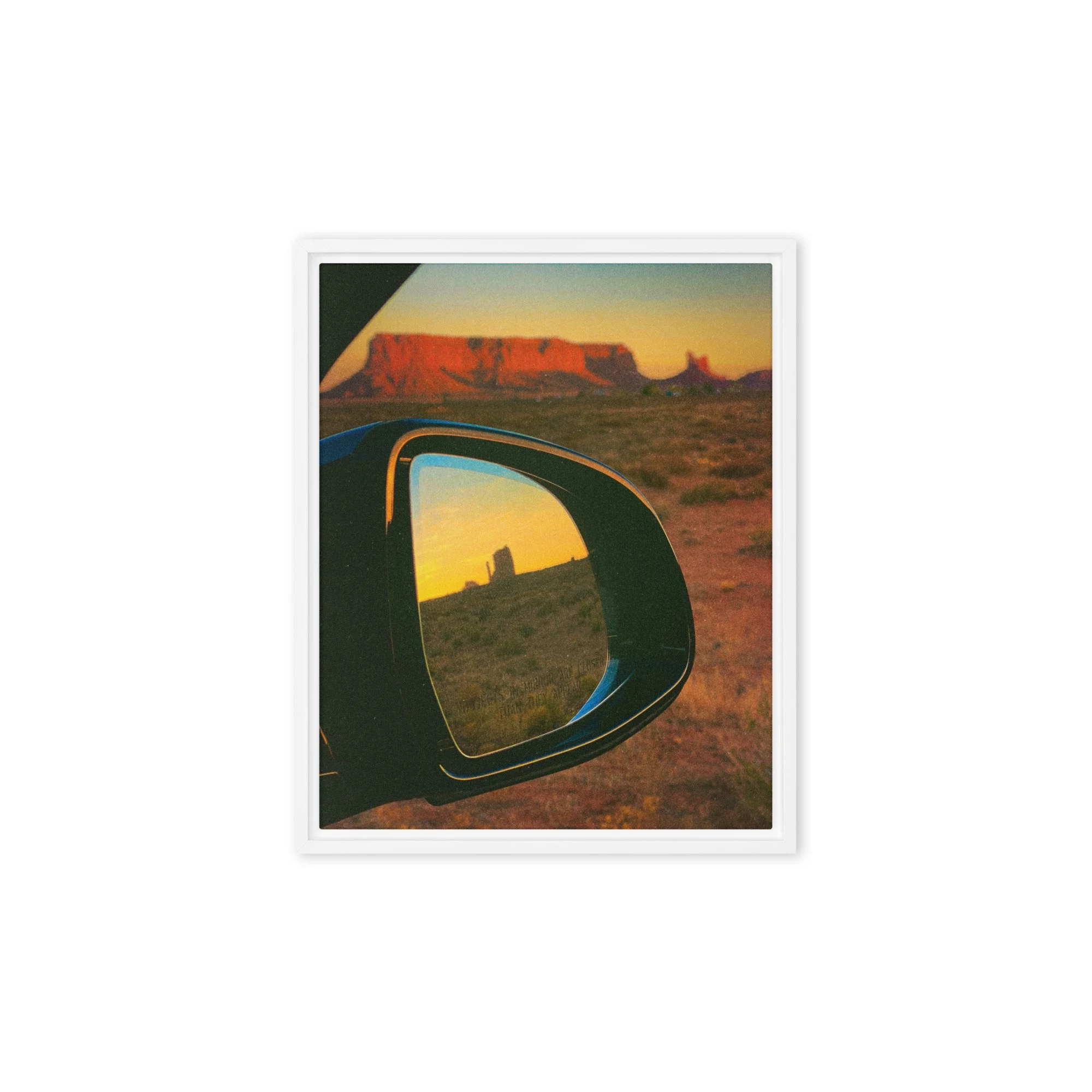
In "Monument Valley - A Look Back," Glen Wilbert photographs a Monument Valley butte caught in a car's side mirror at sunset, the small reflected formation glowing against a gold sky inside the mirror while a larger red mesa rises in the landscape beyond.
The image plays one view against another: the dark curved housing of the side mirror fills the lower left, holding a bright reflection of a lone butte and the setting sun, while the actual desert and a sunlit red mesa sit out of focus behind it. Glen kept the warm pastel palette of dusk, gold and rust and soft blue, and let the engraved mirror text, "objects in mirror are closer than they appear," read faintly across the glass. The contrast between the sharp reflection and the soft background gives the picture its depth.
The image captures the experience of leaving Monument Valley by car, the landmark seen in the mirror as the road carries on. It is a literal expression of the When in Roam idea of the look back from the open road.
A study in pastel light and reflection, where the desert is seen twice, once in the mirror and once beyond it.
Awards and Recognition
Glen Wilbert's work has earned national recognition, including First Place at the 2024 iPhone Photography Awards, multiple Gold Medals at the reFocus Awards, and selection for more than thirty juried exhibitions across the United States.
Details
• Framed canvas print, pine wood frame with a floating-frame effect
• Frame thickness: 1.25 in (3.18 cm)
• Canvas weight: approximately 344 g/m2
• White frame with a white inner border around the canvas
• Open back, rubber corner pads, hanging hardware attached
• Printed and framed in the USA
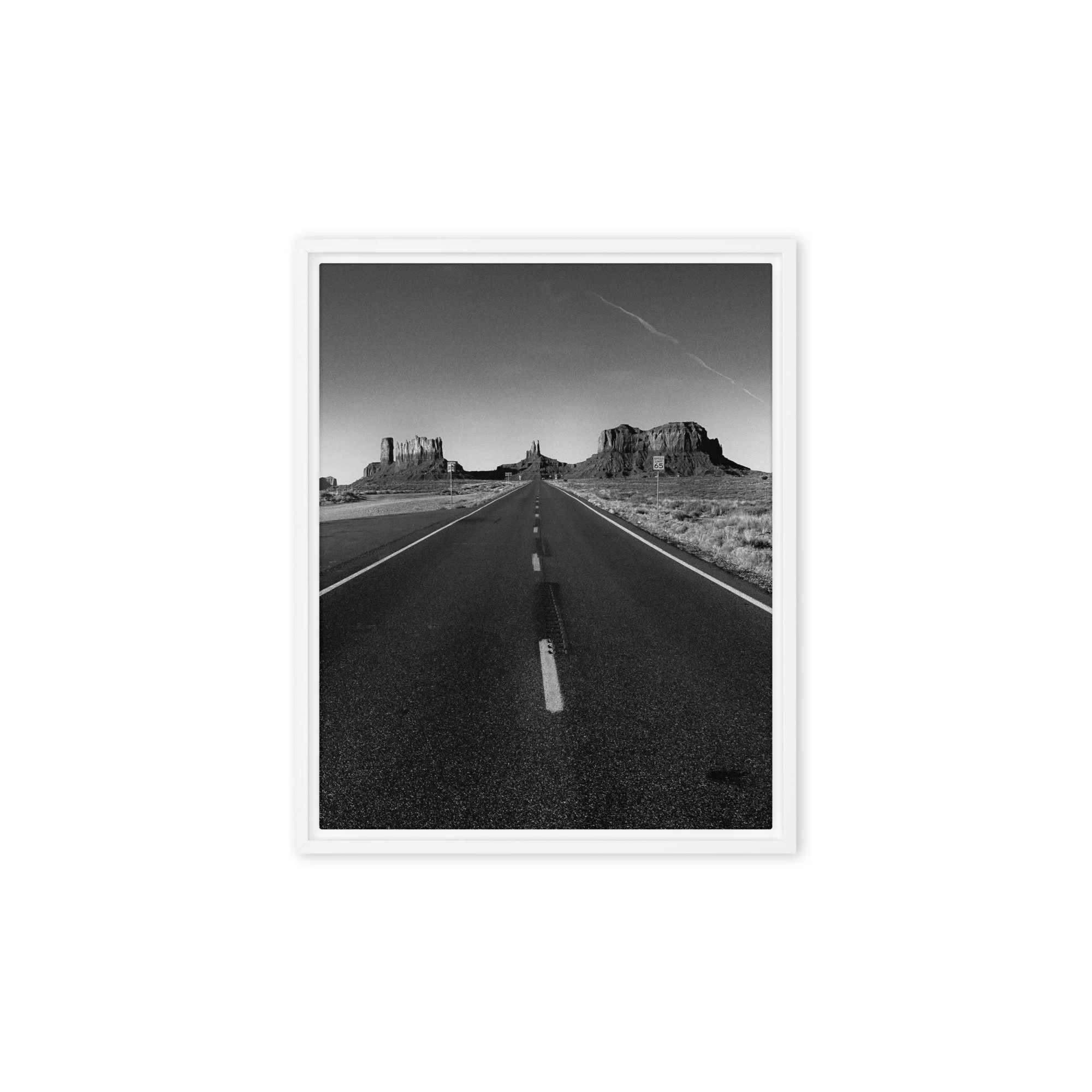
In "Moab," Glen Wilbert photographs an empty two-lane highway running straight away from the camera toward the distant buttes of Monument Valley, the dashed center line drawing the eye to the horizon under a clear, dark sky.
The image is rendered in black and white, with the dark asphalt filling the foreground and the painted center line leading sharply to a vanishing point between the rock formations. Glen stood in the center of the road and shot low and straight so the highway becomes a strong central axis, the mittens and mesas of the valley rising small on either side of the horizon and a single thin contrail marking the sky. The deep tonal range, from black road to bright sky, gives the picture its graphic strength.
This stretch of highway near the Utah-Arizona border, on the approach to Monument Valley, is one of the most iconic road-trip views in the American West. It is a defining image for the When in Roam project and its road-trip theme.
In black and white, the composition is built on line and perspective: a single road running straight to the buttes on the horizon.
Awards and Recognition
Glen Wilbert's work has earned national recognition, including First Place at the 2024 iPhone Photography Awards, multiple Gold Medals at the reFocus Awards, and selection for more than thirty juried exhibitions across the United States.
Details
• Framed canvas print, pine wood frame with a floating-frame effect
• Frame thickness: 1.25 in (3.18 cm)
• Canvas weight: approximately 344 g/m2
• White frame with a white inner border around the canvas
• Open back, rubber corner pads, hanging hardware attached
• Printed and framed in the USA
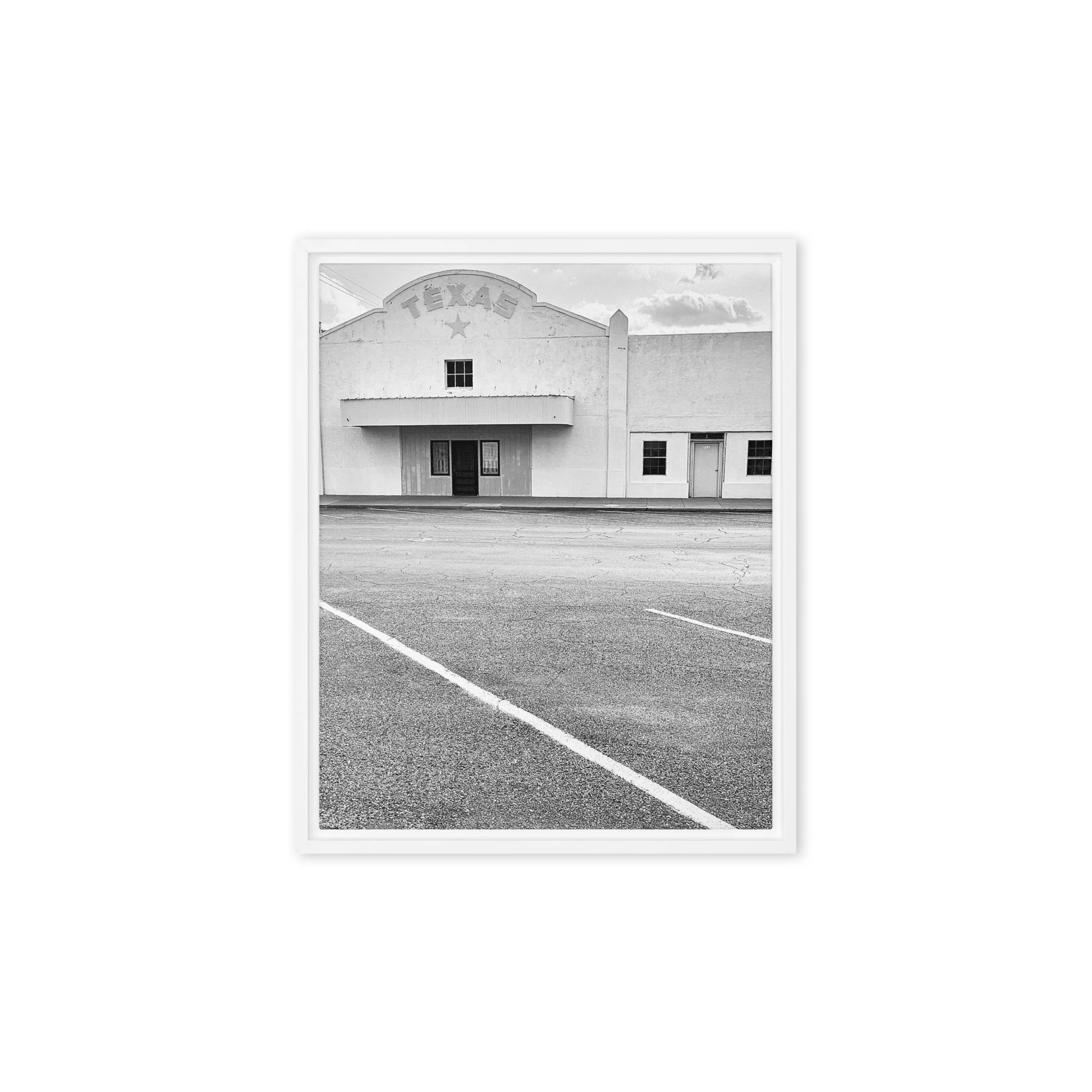
In "Marfa, Texas," Glen Wilbert photographs a low white building with the word "TEXAS" and a lone star across its arched facade, set back across a wide, empty asphalt lot marked with painted parking lines.
The image is rendered in black and white and built on open space, with the cracked, pale parking lot filling most of the lower frame and the single-story building running along the horizon beneath a big sky. Glen framed the scene straight on and low so the white painted parking stripe leads in from the foreground and the building sits small and centered, its arched parapet and star the only ornament. The emptiness of the lot is as much the subject as the building itself.
Marfa is a remote town in the West Texas desert, known for its blend of ranching culture and minimalist art. The quiet, vacant composition recalls the deadpan roadside photography of Ed Ruscha.
In black and white, the composition is built on emptiness and line: a small marked facade set across a wide bare lot.
Awards and Recognition
Glen Wilbert's work has earned national recognition, including First Place at the 2024 iPhone Photography Awards, multiple Gold Medals at the reFocus Awards, and selection for more than thirty juried exhibitions across the United States.
Details
• Framed canvas print, pine wood frame with a floating-frame effect
• Frame thickness: 1.25 in (3.18 cm)
• Canvas weight: approximately 344 g/m2
• White frame with a white inner border around the canvas
• Open back, rubber corner pads, hanging hardware attached
• Printed and framed in the USA
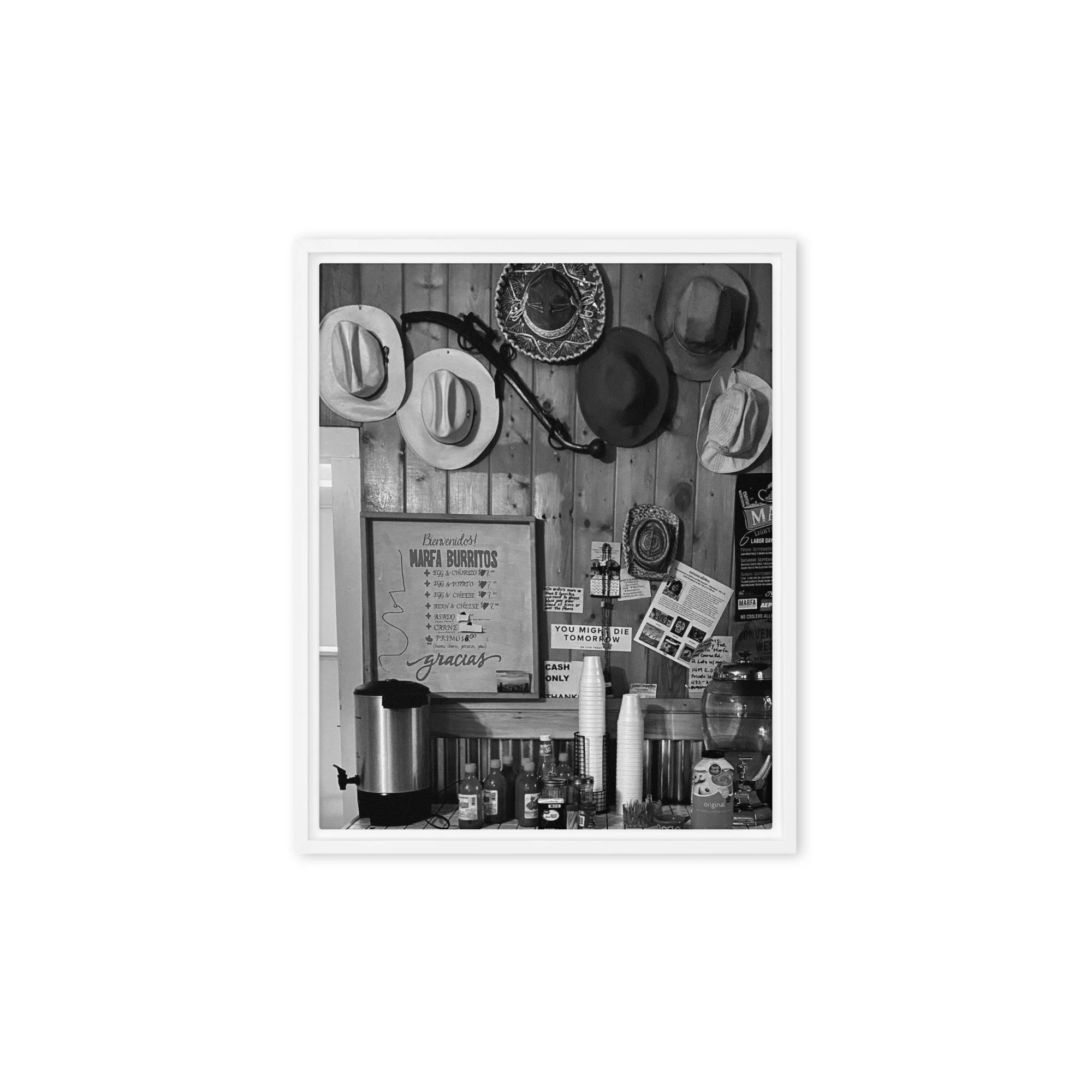
In "Marfa Burrito, Texas," Glen Wilbert photographs the interior wall of the well-known Marfa Burrito eatery, where a row of cowboy hats and a sombrero hang above a hand-lettered menu board, a coffee urn, stacked cups, and a counter of condiments.
The image is rendered in black and white, which unifies the crowded scene and emphasizes the wood paneling, the felt and straw of the hats, and the handwriting on the "Marfa Burritos" sign. Glen framed the wall straight on so the hats line up across the top like a header and the menu, taped notes, and counter clutter fill the lower half. Small details reward a closer look, including a taped card that reads "you might die tomorrow." The picture captures the specific, lived-in character of the place.
Marfa, in the high desert of West Texas, is a small town known both for its minimalist art installations and for unpretentious local spots like this one. The image sits squarely in Glen's road-trip Americana.
In black and white, the composition is built on arrangement and detail: hats, signage, and counter objects read as a single textured wall.
Awards and Recognition
Glen Wilbert's work has earned national recognition, including First Place at the 2024 iPhone Photography Awards, multiple Gold Medals at the reFocus Awards, and selection for more than thirty juried exhibitions across the United States.
Details
• Framed canvas print, pine wood frame with a floating-frame effect
• Frame thickness: 1.25 in (3.18 cm)
• Canvas weight: approximately 344 g/m2
• White frame with a white inner border around the canvas
• Open back, rubber corner pads, hanging hardware attached
• Printed and framed in the USA
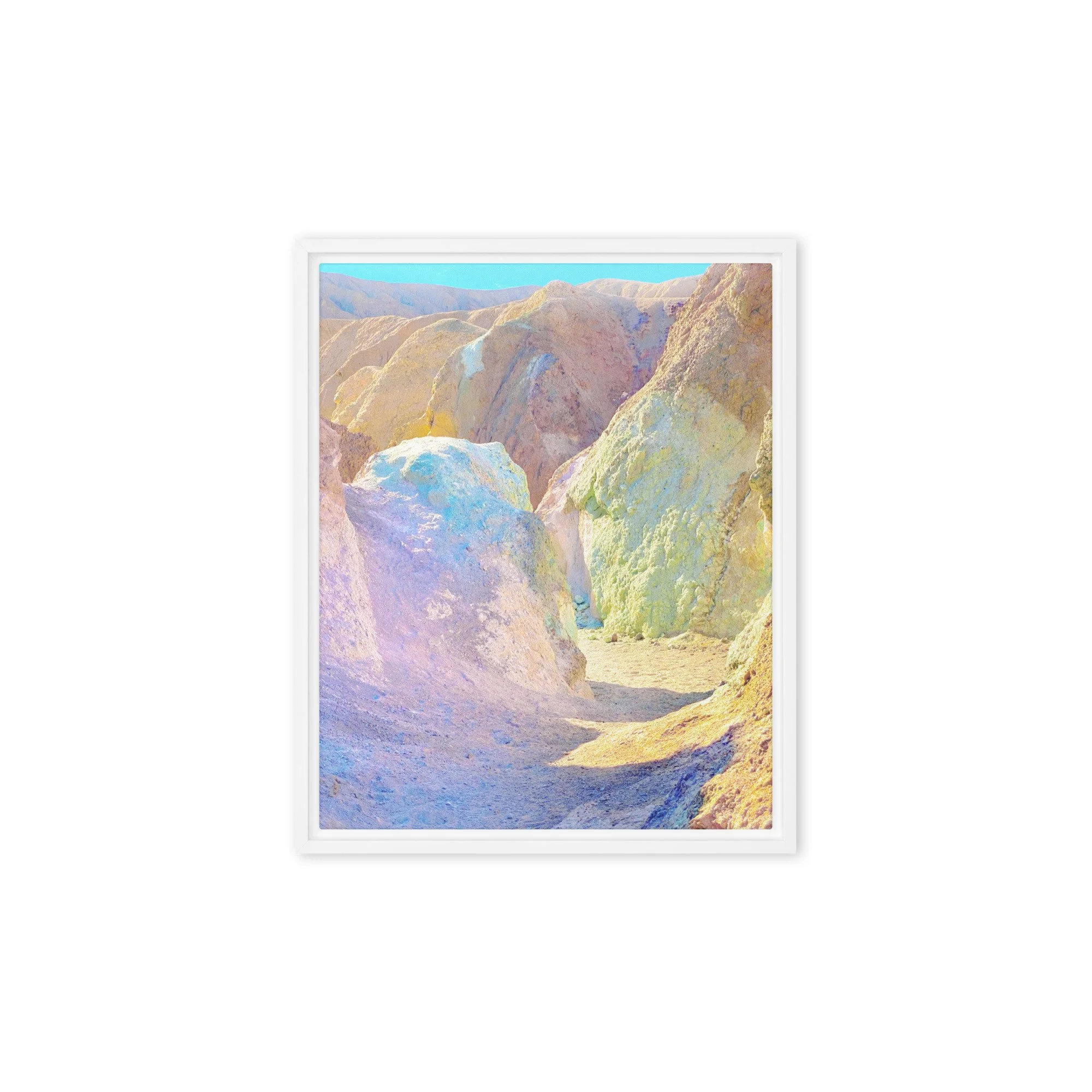
In "Death Valley Artist Palette 2," Glen Wilbert photographs a cluster of eroded boulders at Artists Palette in Death Valley, framing the rounded mineral formations close up against a thin strip of bright turquoise sky.
The image holds an even softer pastel range than its companion piece, with the rock washed in pale green, lavender, cream, and gold. Glen filled most of the frame with the formations themselves, shooting from the floor of a small wash so the pale mounds rise on either side and a shadowed path leads between them into the distance. The close framing and high-key light flatten the scene into soft, blended color, with texture surfacing only in the foreground gravel.
This is a second view of the Artists Palette area, where mineral deposits tint the volcanic rock in unusual colors. Where the first piece follows a blue wash uphill, this one moves in close on the rock itself.
A study in pastel tone and soft form, where the desert is reduced to pale, sunlit color.
Awards and Recognition
Glen Wilbert's work has earned national recognition, including First Place at the 2024 iPhone Photography Awards, multiple Gold Medals at the reFocus Awards, and selection for more than thirty juried exhibitions across the United States.
Details
• Framed canvas print, pine wood frame with a floating-frame effect
• Frame thickness: 1.25 in (3.18 cm)
• Canvas weight: approximately 344 g/m2
• White frame with a white inner border around the canvas
• Open back, rubber corner pads, hanging hardware attached
• Printed and framed in the USA
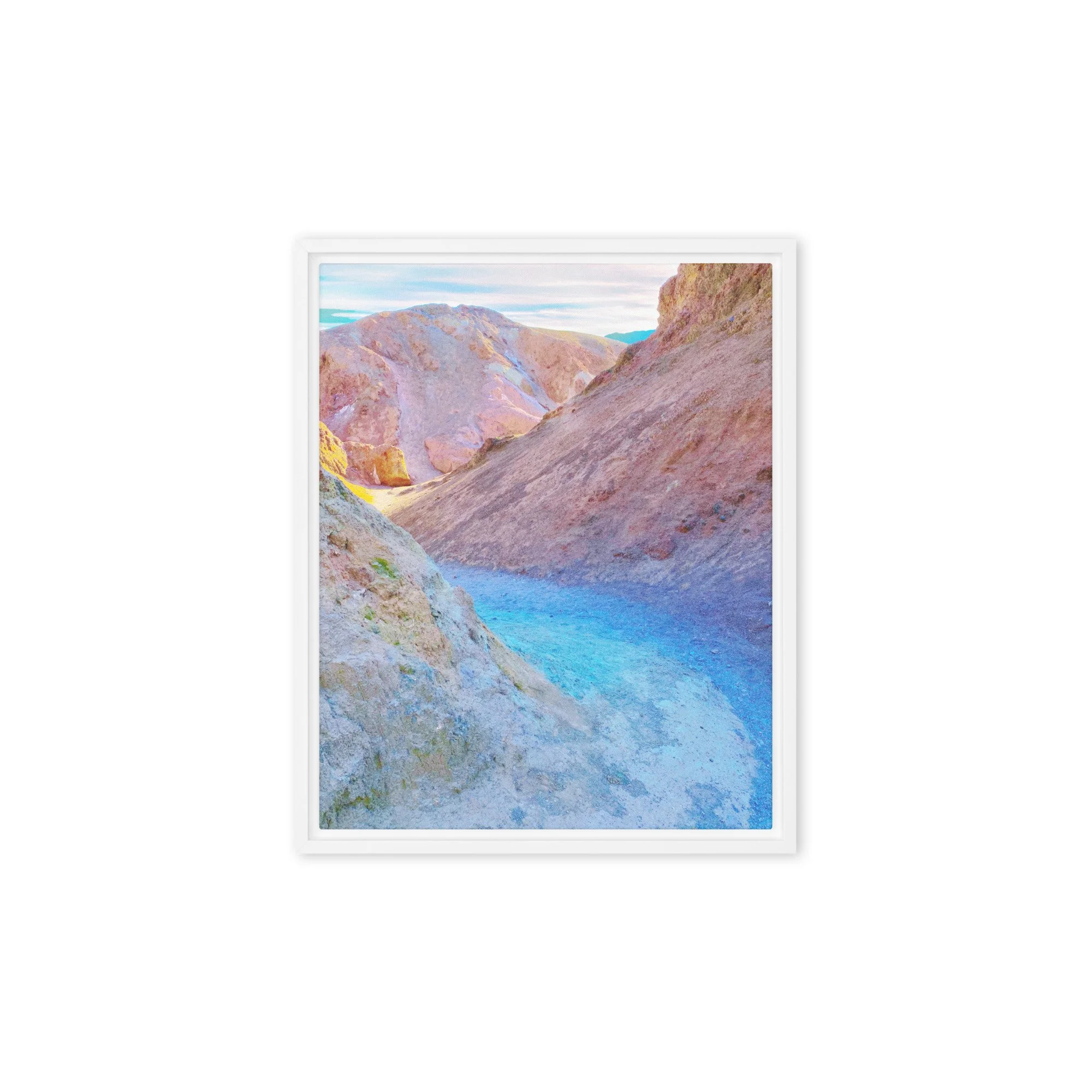
In "Death Valley Artist Palette 1," Glen Wilbert photographs the mineral-stained hills at Artists Palette in Death Valley National Park, California, looking up a narrow wash where a band of pale blue sediment runs between rust, tan, and rose-colored slopes.
The image holds a soft pastel palette, with the cool blue-green of the foreground gully set against the warmer pinks and golds of the surrounding hills and a faint streak of cloud above. Glen positioned the camera low in the channel so the eye follows the curving blue wash uphill toward the brighter, sunlit ridge in the distance. The framing turns the natural color banding of the rock into broad, overlapping fields of muted color.
Artists Palette is a well-known stop along Artists Drive, where oxidized metals in the volcanic soil tint the hills in greens, blues, and reds. It is one of the most photographed spots in the park and a natural subject for the When in Roam project.
A study in pastel color and natural pattern, where the desert's mineral hues are read as soft, layered fields.
Awards and Recognition
Glen Wilbert's work has earned national recognition, including First Place at the 2024 iPhone Photography Awards, multiple Gold Medals at the reFocus Awards, and selection for more than thirty juried exhibitions across the United States.
Details
• Framed canvas print, pine wood frame with a floating-frame effect
• Frame thickness: 1.25 in (3.18 cm)
• Canvas weight: approximately 344 g/m2
• White frame with a white inner border around the canvas
• Open back, rubber corner pads, hanging hardware attached
• Printed and framed in the USA
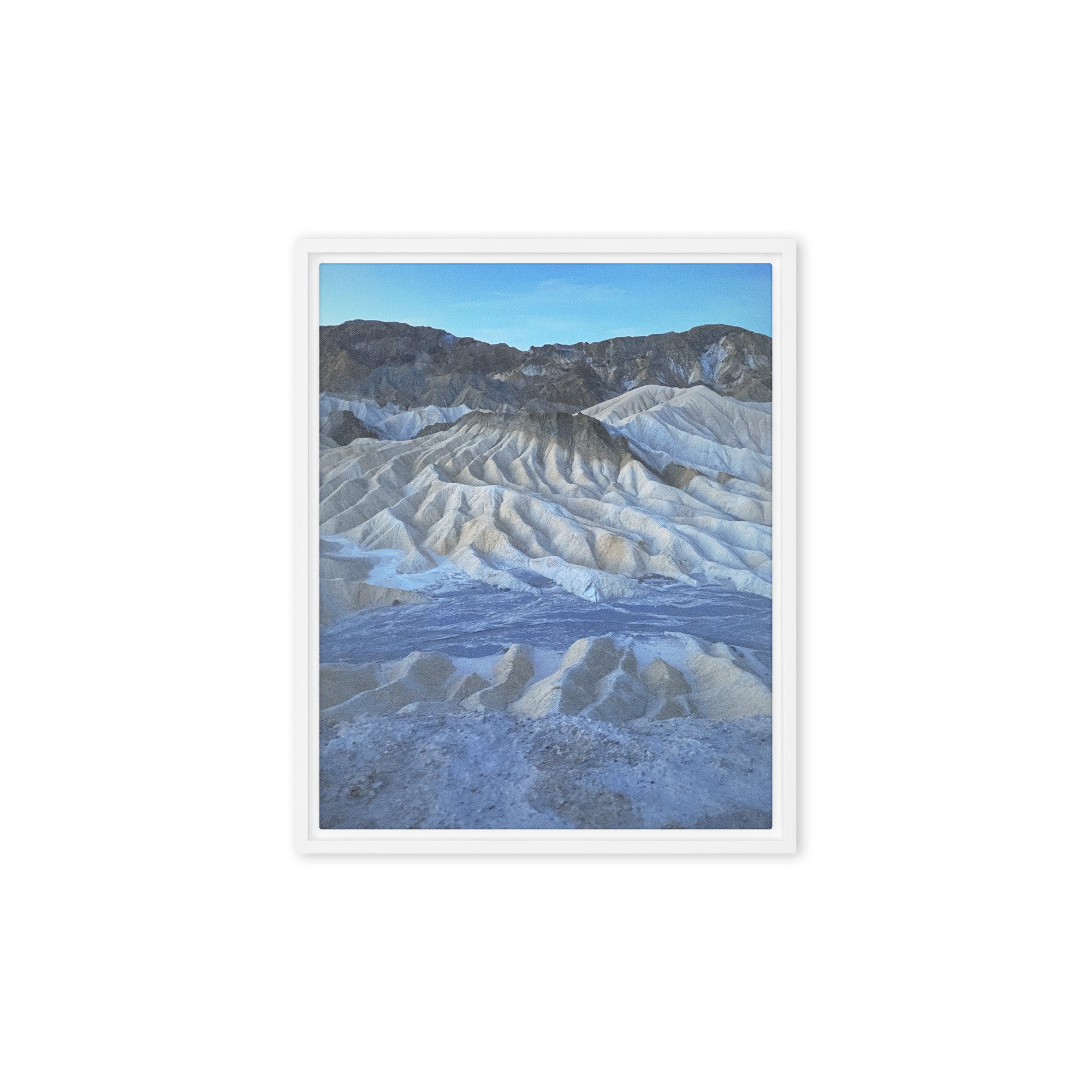
In "Death Valley," Glen Wilbert photographs the eroded badlands at Zabriskie Point in Death Valley National Park, California, capturing the ridged, folded hills at dusk under a clear blue sky.
The image holds a cool pastel palette of blues, grays, and pale gold, the light of early evening flattening the ridges into soft tonal bands. Glen framed the rippling, sculpted formations so that their ridgelines run in overlapping diagonals across the frame, with a darker channel cutting through the center. The low light brings out the texture of the eroded clay while keeping the overall color soft and muted.
Zabriskie Point is one of the most visited overlooks in Death Valley, known for its wavelike badlands formed from ancient lake sediments. It is a landmark stop in the Southwest desert and a natural subject for the When in Roam project.
A study in pastel tone and natural pattern, where the desert is rendered in soft blue light and folded line.
Awards and Recognition
Glen Wilbert's work has earned national recognition, including First Place at the 2024 iPhone Photography Awards, multiple Gold Medals at the reFocus Awards, and selection for more than thirty juried exhibitions across the United States.
Details
• Framed canvas print, pine wood frame with a floating-frame effect
• Frame thickness: 1.25 in (3.18 cm)
• Canvas weight: approximately 344 g/m2
• White frame with a white inner border around the canvas
• Open back, rubber corner pads, hanging hardware attached
• Printed and framed in the USA
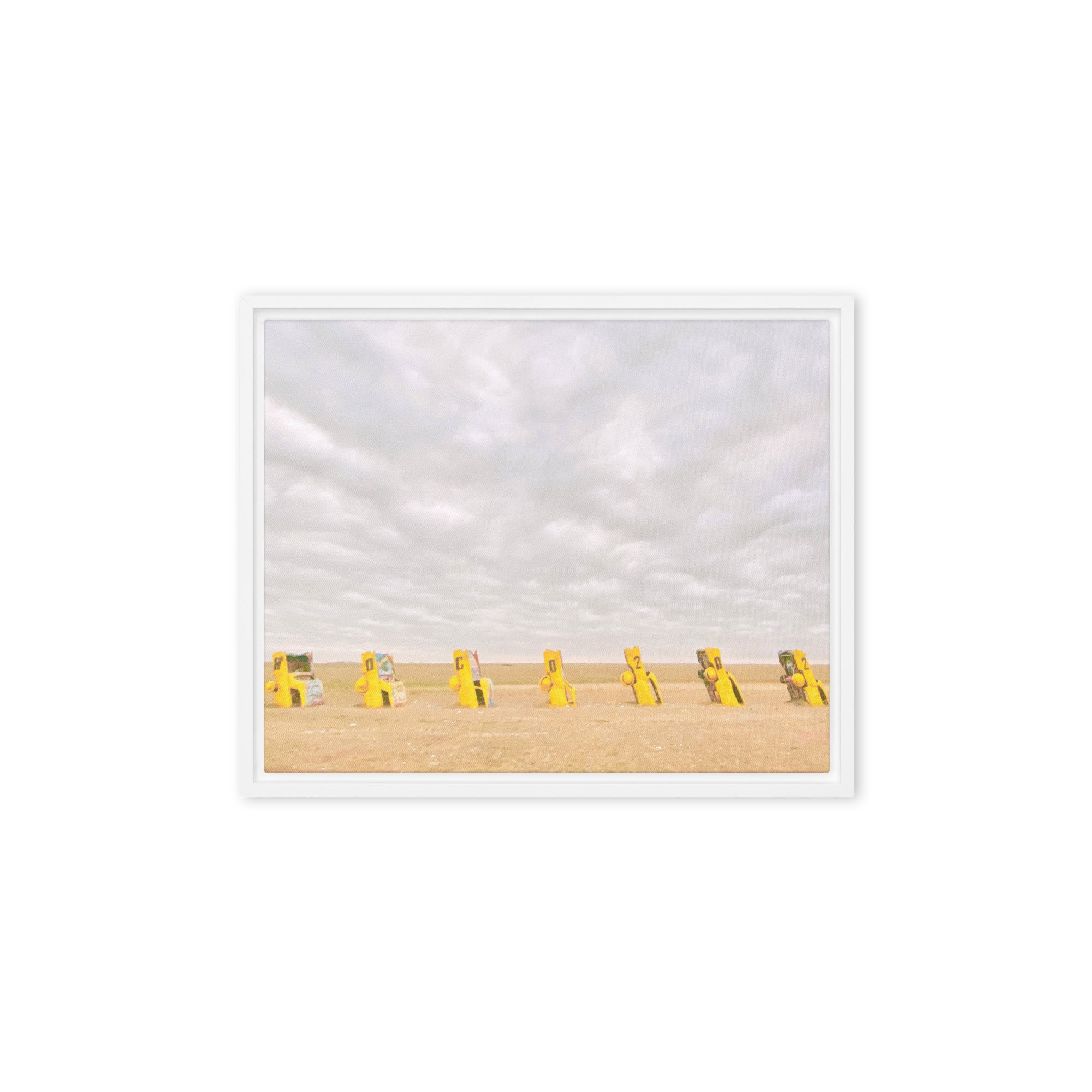
In "Cadillac Ranch - Amarillo, TX," Glen Wilbert photographs the row of half-buried Cadillacs at the famous roadside installation, their nose-down tail fins lined up across the flat Texas plain beneath a wide, cloud-filled sky.
The composition gives most of the frame to the pale, overcast sky, with the cars compressed into a thin band along the horizon. Shot from a distance and straight on, the buried cars read as a row of evenly spaced shapes, their spray-painted colors softened to pastel against the dry tan earth. The large empty sky and small line of cars create a strong sense of open, flat space.
Cadillac Ranch, west of Amarillo along old Route 66, is a public art installation created in 1974, where ten Cadillacs are buried nose-first and continually repainted by visitors. It is one of the most recognized landmarks of the American road trip, exactly the kind of subject Glen's When in Roam project is built around.
A study in pastel color and open space, where a roadside icon is reduced to a quiet line on the horizon.
Awards and Recognition
Glen Wilbert's work has earned national recognition, including First Place at the 2024 iPhone Photography Awards, multiple Gold Medals at the reFocus Awards, and selection for more than thirty juried exhibitions across the United States.
Details
• Framed canvas print, pine wood frame with a floating-frame effect
• Frame thickness: 1.25 in (3.18 cm)
• Canvas weight: approximately 344 g/m2
• White frame with a white inner border around the canvas
• Open back, rubber corner pads, hanging hardware attached
• Printed and framed in the USA
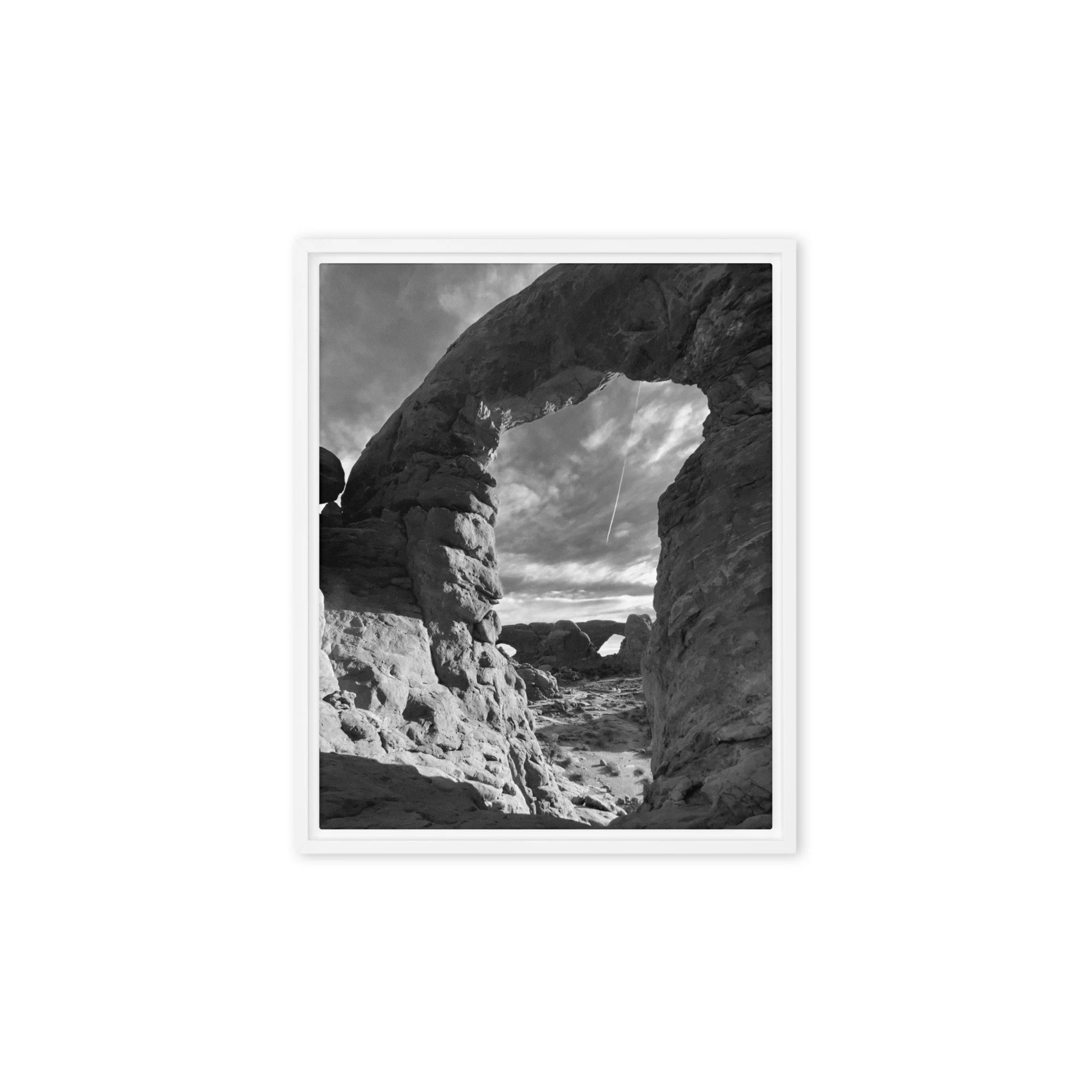
In "Arches," Glen Wilbert photographs the Windows section of Arches National Park in eastern Utah, shooting a large sandstone arch from below, with a smaller arch visible through the opening in the distance and a single jet contrail crossing the framed patch of sky.
The image is rendered in black and white, which emphasizes the texture of the eroded rock against the smooth, cloud-streaked sky. The dark mass of the stone occupies most of the frame, with the bright opening at its center drawing the eye through to the second arch and the desert floor beyond. Rather than photographing the arch head-on, Glen shot it from the ground looking up, positioning the camera so that one arch frames another behind it. The contrail adds a thin diagonal line across the sky and marks the specific moment the photograph was taken.
The park contains more than 2,000 natural stone arches, formed over millions of years as water and wind eroded the sandstone. This is one of the most visited sites in the American Southwest and a regular stop on road trips through the region.
In black and white, the composition is built on contrast and silhouette: the heavy, textured rock set against open sky.
Awards and Recognition
Glen Wilbert's work has earned national recognition, including First Place at the 2024 iPhone Photography Awards, multiple Gold Medals at the reFocus Awards, and selection for more than thirty juried exhibitions across the United States.
Details
• Framed canvas print, pine wood frame with a floating-frame effect
• Frame thickness: 1.25 in (3.18 cm)
• Canvas weight: approximately 344 g/m2
• White frame with a white inner border around the canvas
• Open back, rubber corner pads, hanging hardware attached
• Printed and framed in the USA
In "Nevada Desert Purple," Glen Wilbert photographs a close-up section of layered desert rock, framing the mineral-banded surface where a pale pink field meets a band of lavender and a wash of soft mint green rising along the right of the frame.
The composition holds a full pastel range of pink, violet, and green, the color running in soft horizontal bands across the layered stone. Glen framed the rock tight so the picture reads as fields of color separated by rippling natural lines, with the shift from cool green to warm pink giving the image its structure. The surface texture, faint striations and shallow ridges, keeps the color from ever going flat.
The image was made in the Nevada desert, where mineral deposits and weathering tint the sandstone in unusual soft colors. It is part of a four-piece series that reads the desert as close-up bands of color rather than wide landscape, and pairs directly with the yellow, orange, and rose pieces in the set.
A study in pastel color and banding, where the desert is read as soft horizontal fields.
Awards and Recognition
Glen Wilbert's work has earned national recognition, including First Place at the 2024 iPhone Photography Awards, multiple Gold Medals at the reFocus Awards, and selection for more than thirty juried exhibitions across the United States.
Details
Framed canvas print, pine wood frame with a floating-frame effect
Frame thickness: 1.25 in (3.18 cm)
Canvas weight: approximately 344 g/m2
White frame with a white inner border around the canvas
Open back, rubber corner pads, hanging hardware attached
Printed and framed in the USA